
How Product Lifecycle Management Services Transform the Oil & Gas Industry?
The Oil & Gas industry is one of the most complex and high-risk sectors in the world. From exploration to production and maintenance, every stage involves heavy equipment, regulatory compliance, documentation, and safety protocols. Managing such massive data and workflows manually leads to delays, high operational costs, and safety issues. This is where Product Lifecycle Management (PLM) services play a transformative role.
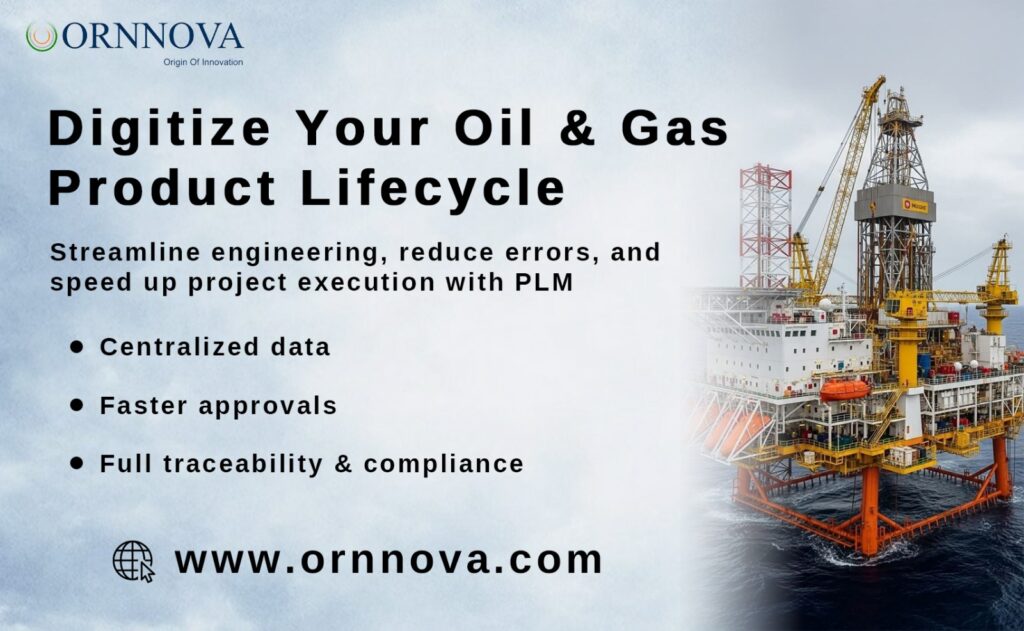
What Is PLM?
Product Lifecycle Management (PLM) is a centralized digital platform that manages the complete lifecycle of equipment, product designs, engineering data, workflow approvals, and maintenance records from concept → design → manufacturing → operation → retirement. Unlike ERP systems, which manage finance and procurement, PLM manages engineering intelligence, documentation, and collaboration.
Why Oil & Gas Companies Need PLM?
Oil & Gas projects involve multiple departments: design teams, field engineers, suppliers, asset managers, compliance officers, and maintenance teams. Without a central system, data becomes siloed and outdated, leading to:
Slow approvals
Compliance issues
Rework and design conflicts
Costly unplanned shutdowns
Product Lifecycle Management(PLM) services ensures all teams work on the latest version of data, reducing risk and confusion.
Key Challenges PLM Solves To begin with, managing thousands of engineering documents
Moreover, tracking complete asset lifecycle history
In addition, maintaining accurate version control during design updates
Furthermore, ensuring equipment certification and strict safety compliance
Along with that, standardizing work processes across global teams
Finally, improving overall operational efficiency and decision-making
Benefits of PLM for the Oil & Gas Industry
By adopting PLM, companies gain significant improvements:
✔ Accelerated product design and engineering workflows
✔ Improved collaboration between internal teams, vendors, and partners
✔ Automated compliance management with easy audit reporting
✔ End-to-end traceability for every asset and lifecycle change
✔ Lower operational downtime with predictive lifecycle planning
✔ Enhanced data accuracy, protection, and security across the system
Real Use Cases of PLM in Oil & Gas
To begin with, offshore equipment lifecycle management
Additionally, pipeline design and certification processes
Moreover, refinery maintenance planning
Furthermore, supplier approvals and documentation workflows
Finally, integration with IoT and Digital Twin for real-time monitoring
ROI and Implementation Roadmap
PLM implementation typically delivers measurable results within months through reduced downtime, faster approvals, and fewer design errors. A planned rollout includes assessment, pilot project, training, and integration with existing systems.
Conclusion
PLM services are now becoming essential for Oil & Gas companies aiming for digital transformation, higher operational efficiency, and improved safety. As the industry moves toward automation and Industry 4.0 technologies, PLM will act as the backbone connecting engineering, operations, and compliance.