
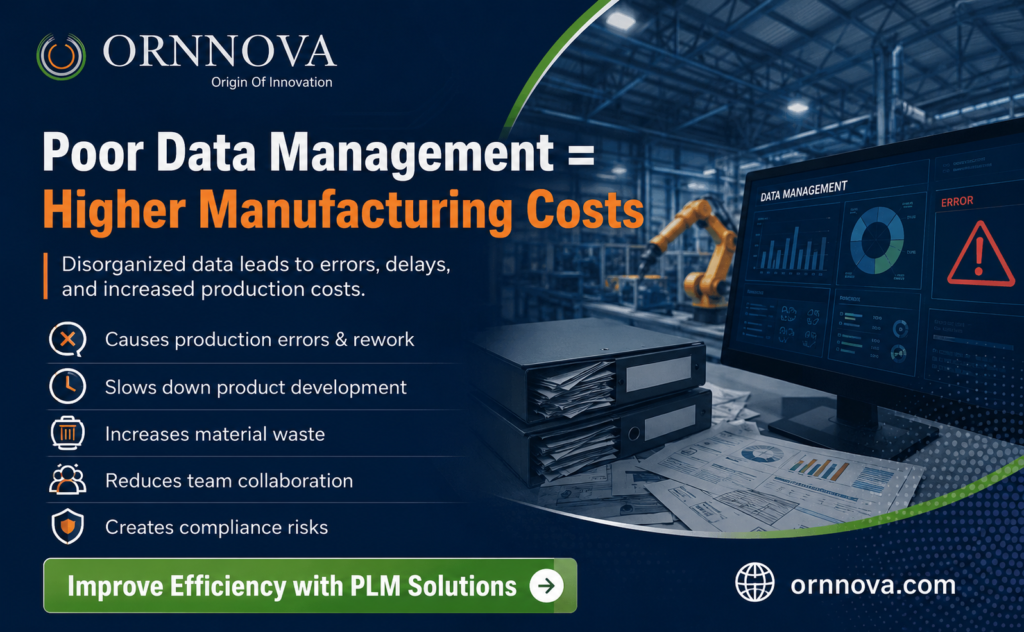
Manufacturing companies generate large amounts of product data every day, including design files, engineering drawings, production records, quality reports, and supplier information. Without effective PLM solutions, managing this data can become challenging, leading to costly mistakes, production delays, reduced productivity, and inefficient decision-making across the organization.
This is why many manufacturers are investing in PLM Solutions to organize product information and improve business operations.
What is Poor Data Management?
Poor data management happens when important information is stored in different systems, spreadsheets, emails, or paper documents. As a result, employees may struggle to find the latest product information.
Common issues include:
- Duplicate files
- Missing product data
- Version control problems
- Communication gaps between teams
- Incorrect production information
These problems can directly impact manufacturing costs.
How Poor Data Management Increases Costs
1. Production Errors
When teams work with outdated drawings or incorrect specifications, products may be manufactured incorrectly. This leads to rework, wasted materials, and additional labor costs.
Using Product Lifecycle Management Services helps ensure everyone works with the latest product information.
2. Increased Product Development Time
Engineers often spend valuable time searching for files instead of focusing on innovation. Poor data management slows product development and delays product launches.
Modern PLM Solutions provide a centralized platform where teams can quickly access the information they need.
3. Higher Material Waste
Incorrect data can result in ordering the wrong materials or producing defective products. This increases waste and affects profitability.
A structured product data management system helps manufacturers reduce these costly mistakes.
4. Poor Team Collaboration
Manufacturing requires collaboration between design, engineering, production, and quality teams. When data is scattered across different systems, communication becomes difficult.
With Product Lifecycle Management Services, all departments can access accurate and up-to-date information from a single source.
5. Compliance Risks
Many industries must follow strict regulatory requirements. Missing or inaccurate records can create compliance issues, leading to penalties and delays.
Proper data management helps maintain documentation and supports audit readiness.
How PLM Solutions Help Manufacturers
Modern PLM Solutions help businesses manage product information throughout the entire product lifecycle.
Benefits include:
- Centralized product data
- Better version control
- Faster product development
- Improved collaboration
- Reduced manufacturing errors
- Lower operational costs
- Better compliance management
By connecting teams and data, manufacturers can improve efficiency and make better decisions.
Why Choose Ornnova?
At Ornnova, we provide advanced Product Lifecycle Management Services that help manufacturers streamline operations, improve collaboration, and reduce unnecessary costs. Our solutions enable businesses to manage product data efficiently from design to production.
Conclusion
Poor data management can significantly increase manufacturing costs through production errors, delays, waste, and compliance challenges. Implementing the right PLM Solutions helps manufacturers gain better control over product information, improve productivity, and reduce operational expenses. Investing in professional Product Lifecycle Management Services is an effective way to achieve long-term manufacturing success.