
In today’s competitive manufacturing environment, accurate product data is essential for successful product development. From CAD files and engineering drawings to bills of materials (BOMs), specifications, and technical documents, every piece of information needs to be correct and up to date. However, when product data is scattered across different systems, errors can easily occur. As a result, engineering teams may spend valuable time correcting mistakes instead of focusing on innovation.This is where PLM services can help.
Product Lifecycle Management (PLM) provides a structured way to manage product information, processes, and engineering changes throughout the product lifecycle.
Create a Single Source of Product Data
First of all, PLM solutions bring important product information together in a centralized environment. Therefore, engineers, manufacturers, quality teams, and other departments can access the latest approved data. This reduces the risk of using outdated CAD files, incorrect BOMs, or old product specifications.
Moreover, product lifecycle management services help organizations establish better data control across every stage of product development. Consequently, teams can spend less time searching for information and more time working on important engineering tasks.
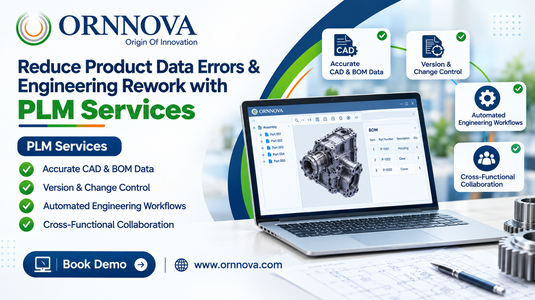
Improve Version Control and Engineering Changes With PLM Services
Furthermore, version control is an important part of reducing product data errors. Without proper control, different teams may unknowingly work with different versions of the same design. However, PLM systems make it easier to track revisions, approvals, and engineering changes.
As a result, engineers can clearly identify the latest version and understand what has changed. This, in turn, helps reduce unnecessary engineering rework and prevents avoidable production issues.
Automate Workflows and Reduce Manual Errors
Additionally, PLM solutions can automate repetitive data management and approval processes. Instead of depending heavily on spreadsheets, emails, and manual updates, companies can create standardized workflows.
For organizations looking for specialized guidance, a PLM consultant can assess existing processes, identify data gaps, and recommend suitable improvements. Therefore, businesses can implement PLM more effectively while aligning the system with their engineering and manufacturing requirements.
Support Better Collaboration In PLM Services
At the same time, effective collaboration is critical for modern product development. Engineering, manufacturing, procurement, and quality teams often need to work with the same product information. With the right PLM platform, teams can share accurate information and stay aligned throughout the development process.
For example, companies exploring 3DPLM Software Solutions can leverage PLM capabilities to improve product data management, collaboration, and engineering workflows. In addition, organizations can work with experienced providers such as 3DPLM Global Services to address complex PLM implementation, integration, and support requirements.
Reduce Rework and Improve Product Development
Ultimately, the right PLM service can help companies reduce product data errors, minimize engineering rework, and improve overall productivity. More importantly, better data visibility and controlled processes allow teams to make informed decisions faster.
Therefore, if your organization is facing repeated design errors, disconnected product data, or time-consuming engineering changes, investing in the right PLM solutions can help create a more connected and efficient product development environment.