
As businesses grow, product development often becomes increasingly complex. As a result, managing designs, documents, product data, and team communication can become challenging. Furthermore, when multiple teams work together, even small mistakes can lead to delays, confusion, and additional costs. Therefore, businesses need an effective way to streamline their product development processes. This is where PLM services play a crucial role, helping businesses manage product development more efficiently and improve collaboration across teams.
What Are PLM Services?
Product Lifecycle Management (PLM) is a process that manages a product from its initial idea to design, development, manufacturing, and delivery. These product lifecycle management services help businesses organize product information, improve collaboration, and maintain smooth workflows throughout the product journey.
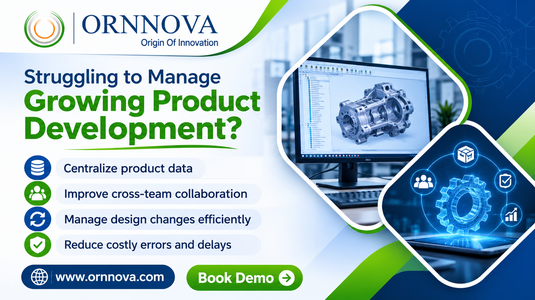
Common Challenges in PLM Services
As businesses expand, they often face several challenges:
1. Poor Data Management: Handling product information across multiple files can create confusion.
2. Communication Gaps: Teams may struggle to share updates and coordinate their activities.
3. Design Changes: Tracking design updates and maintaining correct versions becomes difficult.
4. Production Delays: Missing information and approval issues can affect delivery schedules.
5. Increased Costs: Manual work and repeated tasks can increase operational expenses.
How PLM Services Help Businesses
Therefore, by adopting the right approach, businesses can effectively overcome these challenges and enhance overall productivity.
1.Centralized Data Management
Moreover, employees can easily access accurate and updated product data whenever needed through a centralized PLM system.
2.Better Team Collaboration
Different departments can share information and collaborate smoothly. As a result, communication improves, and unnecessary delays are minimized.
3. Efficient Change Management
Moreover, PLM helps track design updates and maintain version history, thereby ensuring that teams always work with the latest information.
4. Faster Product Development
By automating routine tasks, businesses can save time and complete development activities faster. For example, 3dplm software solutions support better product data management and streamlined workflows.
5. Reduced Costs and Errors
Furthermore, an experienced PLM consultant can guide businesses in selecting the most suitable PLM solutions based on their specific requirements. As a result, companies can also leverage 3DPLM Global Services to streamline product development processes and improve overall efficiency.
Conclusion
Managing growing product development processes does not have to be difficult. With the right technology and strategy, businesses can effectively improve collaboration, reduce errors, and accelerate product delivery. Moreover, by implementing the right PLM approach, companies can streamline operations and enhance overall efficiency. As a result, they can build better products, increase productivity, and ultimately stay competitive in today’s rapidly changing business environment.